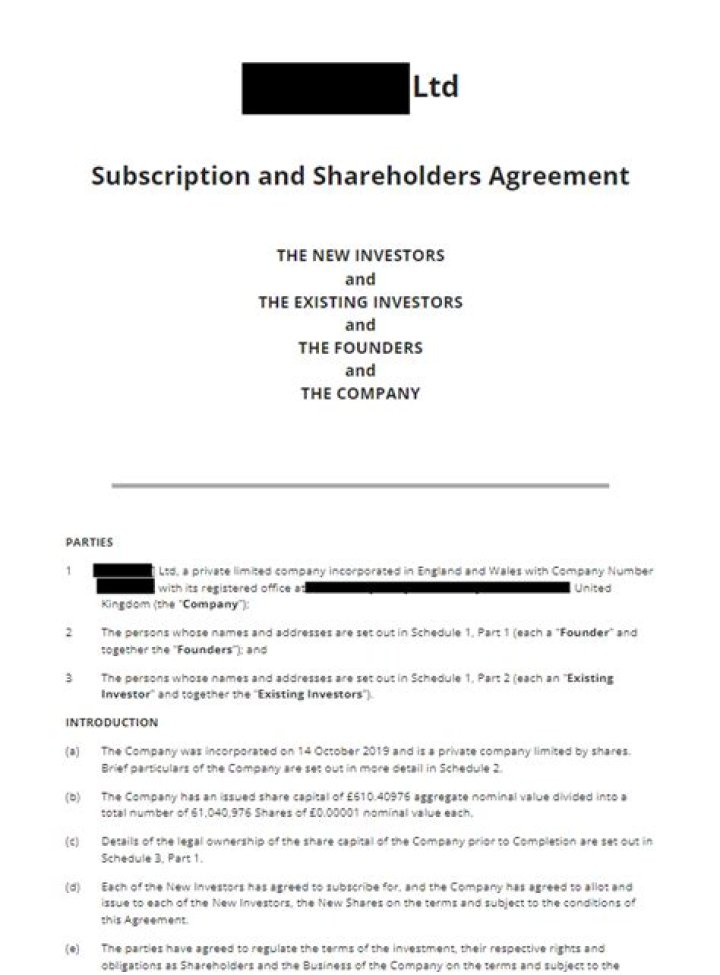
Since a shareholders’ agreement establishes the relationship between the shareholders, without one, you are exposing both shareholders and the company to potential future conflict. This is particularly true in situations where the voting shares in a company are held equally (50% each) by just two people or companies.
Can a corporation not have an owner?
A non-stock corporation is a corporation that does not have owners represented by shares of stock. That type of corporation is called a stock corporation. Instead, a non-stock corporation typically has members who are the functional equivalent of stockholders in a stock corporation (they have the right to vote, etc.)
Which shareholders are the true owners of business?
Equity shareholders are the real owners of the company. Equity shares represent the ownership of a company and capital raised by the issue of such shares is known as ownership capital or owner’s funds. They are the foundation for the creation of a company.
Who are the owners of a public corporation?
The owners of a corporation are known as shareholders. Shareholders provide the capital necessary to operate the business in exchange for shares of stock. Some owners may receive shares even if they do not provide capital.
What happens if a party is not named in a contract?
If the intended party isn’t named, you may lose any recourse against it if that party fails to live up to its obligations. Making Sure the Parties are Named Correctly. Making sure the parties are named correctly is another potential pitfall to keep in mind.
Do you need a business name for a party planner?
There are lots of opportunities for new party planner businesses to thrive in the industry. The first step needed is to figure out the perfect business name. Naming a business after you is a risky strategy and will most likely not return short-term rewards.
Which is the best definition of private ownership?
Private ownership: ownership of property by non-governmental legal entities. Fractional ownership: ownership held in percentage shares of an expensive asset, sold to individual owners, who are charged fees for the asset’s management and variable use.